

Water Pressure Repairs
Pretoria North
Water pressure repairs Pretoria North homes need start with a gauge. The same weak shower can be a blocked aerator, a half-closed valve, a narrowed pipe or a reservoir running low at peak time.
Request a call-out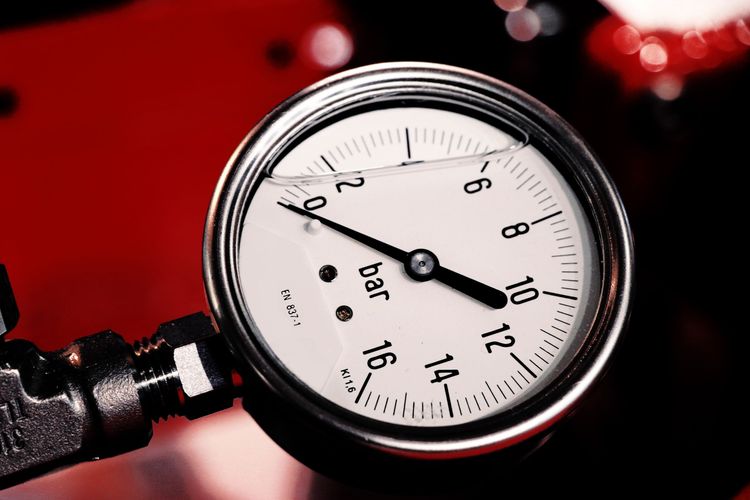
Low pressure, high pressure, and pressure that comes and goes
Too little is irritating. Too much is what breaks things.
Low pressure at one tap is usually at that tap: a blocked aerator, a scaled shower head or a failing mixer. Low pressure everywhere points further back: a valve partly closed, a leak, a pipe narrowed inside, or the supply itself dropping while the whole street uses water.
High pressure does the damage. It wears tap washers and toilet valves, bangs pipes when a tap shuts, and pushes geyser valves past their rating. A pressure reducing valve on the main line is often the cheapest fix for a house that keeps breaking fittings.
Pressure that comes and goes, strong at night and weak in the morning, is usually the supply. That is where a storage tank and booster pump make sense, fitted so nothing can flow back into the City's pipes.
The City promises no pressure, but it will measure yours
Tshwane's by-law puts the pressure inside your property on you, and gives you a way to prove what arrives.
900 kPaThe highest pressure national rules allow at a household connection
Tshwane's Water Supply By-laws state that supplying water is not an undertaking to keep up a specific pressure or rate of flow (section 20). If your house needs a particular standard, the by-law leaves it to the owner to provide for it inside the water installation.
The same by-laws give you a way to find out what actually arrives. On application, and for a fee, the City may measure the pressure in its system at your property over the period you ask for, and tell you the result (section 17). It is the official measurement, and it settles whether the problem is the supply or the house.
Both extremes happen in the north. At the high end, national rules allow municipal pressure up to 900 kPa at a household connection, and the City has blamed burst mains in Sinoville partly on high water pressure. At the low end, when the Montana Reservoir was cleaned in May 2025 the supply ran through a bypass the City said may not fully meet peak demand, and heatwaves have drawn down the Montana, Magalieskruin and Sinoville reservoirs.
If the answer is a tank and a pump, the by-law has a say there too. Water from another source may not be used, apart from a rainwater tank that is not connected to the house's water installation, unless the City consents in writing (section 59). Tank makers' own guides call for non-return valves between the pump and the mains so nothing flows back, and only a plumber may service or replace a backflow preventer (section 30).
So the order of work matters: measure, find where the pressure is lost or gained, and only then choose between a valve, a pipe, a reducing valve or a pump.
Before you buy a booster pump, have the pressure measured at your house at peak time and at night. The two numbers decide the fix.
Source: Tshwane Water Supply By-laws, 2014 · GNR 509 national water standards, 2001 · Rekord, Sinoville leaks, 8 September 2025 · City of Tshwane, Montana Reservoir cleaning, 12 May 2025 · City of Tshwane, reservoir levels, 8 December 2023 · JoJo installation guide, 2021
Pressure cardBefore and after
Reading before
Pressure at the main tap at a busy time, and at night if the problem comes and goes.
Cause
Where the pressure is lost or gained: fitting, valve, pipe, leak or supply.
Fix
Matched to the cause and priced first. A pump only when the supply itself is the problem.
Backflow
Non-return valves on any tank or pump installation, so nothing flows back to the mains.
Reading after
The same measurement, written beside the first.
If the readings point at the City's supply, you are told, and shown how to ask the City to measure it.
Measured, then fixed, then measured again
A number on the job card before the work, and another one after it.
Pressure problems are easy to fix in the wrong place: a new shower head, then a pump, when the cause was a half-closed valve all along.
Every pressure job starts and ends with a reading, written side by side.
The plumber behind Noord Plumbing has eight years of plumbing work in Pretoria North.
From a weak shower to a reading that proves it
A gauge on an outside tap tells most of the story in a few minutes.
Describe it
One tap or all of them, all day or only at peak times. That narrows it before anyone arrives.
Measure
Pressure and flow at the main, then at the problem points.
Fix the cause
Valve, pipe, leak, reducing valve, or tank and pump, priced and agreed first.
Measure again
The same reading after the work, beside the first one on your job card.
Water pressure questions
Usually asked in the shower.
How much does it cost to fix low water pressure?
Anything from a cleaned aerator to a tank and booster pump, which is why it is measured first. A blocked fitting or a faulty valve is a small job; a pump installation is a much bigger one. You get the cause and the price before any work starts.
Should I just buy a booster pump?
Only if the supply itself is the problem. A pump cannot fix a blocked pipe or a half-closed valve, and it adds running costs and another part that can fail. Measure first.
Why does my pressure drop in the mornings?
Morning is when the whole street showers at once. If your pressure is fine at night and weak at peak times, the supply is the likely cause, and storage or a pump may be the answer. If it is weak all the time, look inside the property first.
Can high water pressure damage my geyser?
It can. The geyser's pressure control valve is there to keep mains pressure, which may legally reach 900 kPa, below the tank's rating. If that valve fails, the safety valve starts dripping and the tank is under strain. A pressure reducing valve on the main protects everything after it.
Can I connect a water tank to my house plumbing?
Not freely. Tshwane's by-law only allows another water source if it is a rainwater tank that is not connected to the water installation, unless the City consents in writing. A tank used as backup storage for municipal water must be plumbed with non-return valves so nothing flows back into the mains.
Who checks the pressure the City supplies?
The City, on application and for a fee: its by-law lets an owner ask for the pressure at the property to be measured over a chosen period. The result settles whether the problem is the supply or the house.
Request a call-out
Tell us the job and leave a number, and the plumber calls you to talk it through.
Water where it should not be? Turn it off at the meter now. It is the cheapest part of any repair.
Pretoria North and the suburbs around it
From the Apies River west to Rosslyn, and from Onderstepoort down to the foot of the Magaliesberg.
North
Wolmer, Onderstepoort, Bon Accord, Hesteapark, Clarina, The Orchards, Klerksoord
East
Annlin, Wonderboom, Sinoville, Magalieskruin, Montana, Montana Park, Doornpoort
South
Mountain View, Park Town Estate, Mayville, Wonderboom South
West
Dorandia, Florauna, Tileba, Theresapark, Ninapark, Karenpark, Amandasig, Akasia, Chantelle, Rosslyn
Not sure your suburb is covered? Send the request anyway and say where you are.